
Cert. CMRCA
Clinical Management of the Rock Climbing Athlete
A complete, climbing-specific framework for evaluating, rehabilitating and returning climbers to performance. Three courses, bonus clinical resources and a final exam, built by The Climb Clinic.

Three courses. One credential.
 COURSE 1 OF 3
Finger Injuries
12 contact hours · 1.2 CEUsThe 12 most common finger injuries in climbers, the most common injuries in the sport.
Course details COURSE 2 OF 3
Upper Body Injuries
12 contact hours · 1.2 CEUsShoulder, elbow, wrist, cervical and thoracic spine injuries in climbers.
Course details COURSE 3 OF 3
Lower Body Injuries
12 contact hours · 1.2 CEUsLumbar spine, hip, knee, ankle, foot and toe injuries in climbers.
Course detailsMore than the three courses
Cert. CMRCA isn’t just the three courses for less. It also unlocks a library of resources you can’t get with a single course, and it keeps growing.
Case study reviews
6 hours of case studies being added throughout 2026–2027, working through real climbing injuries with the frameworks from the courses. Every session is recorded.
Climbing Mobility Snapshot
A systematic approach to finding the mobility limits that affect climbing performance and injury risk.
Expert lectures
- PPS webinar: what works, what doesn’t & what’s next
- Vector PPS: APTA Innovation Practice Award recipient 2026
- The 5 biggest lessons from building The Climb Clinic
- Explaining pulley injuries to climbers
New lectures added over time.
Prenatal & postpartum climbers
A course on supporting climbers through pregnancy and their return to climbing postpartum.
Growth plate injuries in youth climbers
What youth climbers, parents and coaches need to know about growth plate injuries in young climbers.
Route setter health & performance
How to establish a health and performance program for the route setters at your local climbing gym.
Our climbing rehab exercise library is free for everyone on YouTube.
Your path to Cert. CMRCA
Work through three climbing-specific courses at your own pace, then pass the final exam to earn your credential.
- 01
- 02
- 03
- ✓Credential
Cert. CMRCA
Pass the final exam and add Cert. CMRCA to your name.
Climbing is growing fast. Clinical training hasn't kept up.
Most healthcare professionals get little formal education in climbing's injury patterns and movement demands. Cert. CMRCA brings finger, upper body and lower body care together into one climbing-specific system.
- Build expertise in climbing-related injuries
- Apply orthopedic principles in a climbing-specific framework
- Treat climbers of every level with more confidence
- Show your specialization with a recognized credential
Anyone who cares for climbers
Built primarily for healthcare professionals, and valuable for anyone working closely with climbers.
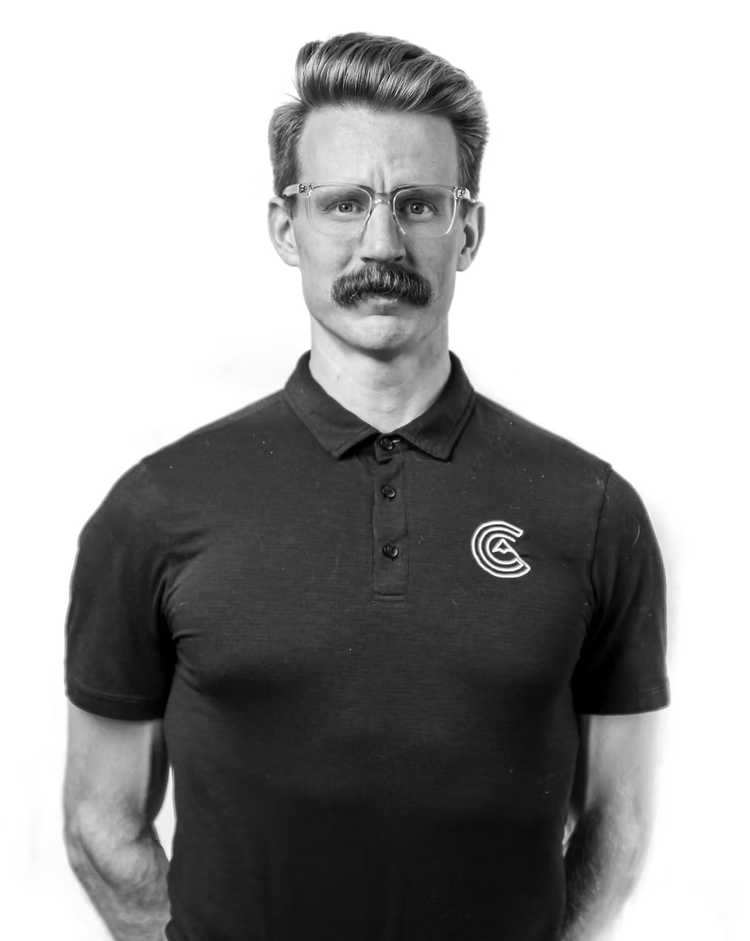
Dr. Kevin Cowell, PT, DPT, OCS, CSCS, FAAOMPT
Kevin is the founder of The Climb Clinic in Golden and Boulder, Colorado, and specializes in the evaluation, treatment and performance of climbing athletes. He works with climbers from beginners to elite and Olympic-level competitors, and serves as a team physical therapist for USA Para Climbing and the Arc'teryx Climbing Team.
He is adjunct faculty in the Regis University Doctor of Physical Therapy program, the author of DK's Science of Climbing, and the developer of the Vector PPS pulley protection splint. A climber himself, he brings a firsthand understanding of the sport's demands to every module.
Clinicians learning from around the world
80+ clinicians from around the world are enrolled in Cert. CMRCA, from solo cash-based practices and climbing gyms to orthopedic surgery teams.
Built for the climbers you actually see
After each course we ask clinicians what they valued most. These themes came up again and again.
I really appreciated the attention to detail, and feel as though I obtained the necessary information to begin advancing my climbing rehabilitation niche practice.
Course participant · Post-course survey
The ability to tie in climbing-specific movements and demands into the rehabilitation process will be very helpful in achieving patient buy-in and will improve outcomes.
Course participant · Post-course survey
This gave a much more in-depth analysis for differential diagnosis of different hand and finger injuries … better screening of injuries for myself and patients so we feel more confident with their plan of care.
Course participant · Post-course survey
I appreciated the links being made between multiple pathologies that can and likely will occur simultaneously along the kinetic chain.
Course participant · Post-course survey
Having systematic ways to phase in climbing demands will be helpful in treating climbers.
Course participant · Post-course survey
The objective tests and measures were really helpful to learn, as well as the examples of interventions to use with each phase of rehab.
Course participant · Post-course survey
The differential diagnoses for the foot and toe, because those are not as common in patients but very good to know.
Course participant · Post-course survey
Certification or single course
Cert. CMRCA
$1,299 or 12-month payment plan
- All three courses (36 contact hours)
- ~12 hours of certification-only case studies, lectures & courses
- 6 hours of case studies (2026–2027) & Climbing Mobility Snapshot
- Expert lectures, plus prenatal/postpartum, youth growth plate and route setter content
- Final exam and Cert. CMRCA credential
Single course
$497 per course
- 12 contact hours (1.2 CEUs)
- Finger, Upper Body or Lower Body
- 3 years of access
- No certification resources or credential
| What’s included | Single course | Cert. CMRCA |
|---|---|---|
| Courses | 1 of 3 12 contact hours | All 3 36 contact hours |
| Case study reviews 6 hours, 2026–2027 | — | ✓ |
| Climbing Mobility Snapshot | — | ✓ |
| Expert lectures | — | ✓ |
| Prenatal & postpartum climbers course | — | ✓ Coming soon |
| Youth growth plate injury guide | — | ✓ Coming soon |
| Route setter health & performance program | — | ✓ Coming soon |
| Final exam & Cert. CMRCA credential | — | ✓ |
36 contact hours · 3.6 CEUs
Accepted through reciprocity with California in: Alabama, Arizona, Colorado, Connecticut, Delaware, District of Columbia, Georgia, Hawaii, Idaho, Indiana, Iowa, Kentucky, Maine, Massachusetts, Michigan, Mississippi, Missouri, Montana, Nebraska, New Hampshire, North Carolina, North Dakota, Oregon, Pennsylvania, Rhode Island, South Dakota, Utah, Vermont, Virginia, Washington and Wyoming.
Continuing education requirements vary by state and profession. Please confirm acceptance with your licensing board. We're happy to provide documentation for individual approval requests at kevin@theclimbclinic.com.
Certification questions
What makes Cert. CMRCA different from other orthopedic CE courses?
It focuses specifically on the injury patterns, movement demands, rehabilitation considerations and return-to-climbing decisions you face when working with climbers.
What injuries are covered?
Common climbing-related injuries of the fingers, shoulder, elbow, wrist, cervical spine, thoracic spine, lumbar spine, hip, knee, ankle, foot and toes.
How much does it cost, and is there a payment plan?
Cert. CMRCA is $1,299 for full access to all three courses. A 12-month payment plan is available at checkout.
Can I buy the courses individually?
Yes, each course is $497. Individual courses don't include the certification-only resources (about 12 hours of case studies, lectures and courses), and buying all three separately costs $192 more than the certification.
Can I use the Cert. CMRCA credential when I finish?
Yes. Complete all three courses and pass the final exam with 80% or higher to use the designation Cert. CMRCA.
Do I need to be a climber?
No. Many clinicians who treat climbers don't climb. The program gives you the terminology, movement analysis and clinical framework to manage climbing athletes confidently.
What if I mostly see general orthopedic patients?
The clinical reasoning, rehab programming and return-to-sport principles carry over to a wide range of orthopedic populations.
Is it appropriate for students and new grads?
Absolutely. The systematic framework helps students and early-career clinicians build confidence and clinical reasoning.
How long does it take, and how long do I have access?
36 contact hours of self-paced content. You get 3 years of access to the online platform, and downloadable resources are yours to keep.
Do I need to take the courses in order?
No, but we recommend Finger, then Upper Body, then Lower Body to build clinical reasoning step by step.
Can I access it on my phone or tablet?
Yes. The platform works on computers, tablets and phones with an internet connection.
Who do I contact with questions?
Email kevin@theclimbclinic.com for questions about the certification, CEUs, enrollment or technical support.
Not sure if Cert. CMRCA is right for you?
Email kevin@theclimbclinic.com and Kevin will help you decide.