
Clinical Management of the Rock Climbing Athlete
Cert. CMRCA | Online Continued Education for the Healthcare Provider
Finger Injuries | Upper Body Injuries | Lower Body Injuries | + Exclusive Content
LAUNCHING MONDAY, AUGUST 24th at 8 AM MST
CEU Approved | 36 Contact Hours + Exclusive Content
Clinical Management of the Rock Climbing Athlete
The Certification in the Clinical Management of the Rock Climbing Athlete is a comprehensive, CEU-approved educational program designed for healthcare professionals who want to confidently assess, rehabilitate, and optimize climbing performance.
This self-guided certification includes 36 contact hours of climbing-specific education across three complete courses covering finger injuries, upper-body injuries, and lower-body injuries, along with bonus content, clinical case studies, and a final certification examination.
Built from the unique demands of rock climbing rather than traditional orthopedic models alone, this program provides a complete framework for evaluating movement, identifying performance limitations, managing injuries, and guiding athletes from pain to peak performance.
Whether you're treating recreational climbers, competitive athletes, or elite performers, you'll gain the tools, clinical reasoning, and climbing-specific rehabilitation strategies needed to deliver exceptional care.
From finger injuries to return-to-performance programming, this certification provides one of the most comprehensive educational experiences available for climbing clinicians and sets the benchmark for excellence in climbing injury management.
LAUNCHING MONDAY, AUGUST 24th at 8 AM MST
-
Kevin Cowell, PT, DPT, OCS, CSCS, FAAOMPT, is a physical therapist specializing in the evaluation, treatment, and performance optimization of climbing athletes. He is the Founder of The Climb Clinic, a specialty physical therapy practice with locations in Boulder and Golden, Colorado, dedicated to serving climbers and mountain athletes.
Kevin works with climbers across the full spectrum of ability—from beginners to elite and Olympic-level competitors—and serves as a Team Physical Therapist for USA Para Climbing and the Arc’teryx Climbing Team. He is also Adjunct Faculty for the Regis University Doctor of Physical Therapy Program, where he contributes to the education and clinical development of future physical therapists.
He is the developer of the Vector PPS, a pulley protection splint designed to support finger injury management and safe return-to-climb progression.
Kevin holds advanced credentials including a Doctor of Physical Therapy (DPT), Board-Certified Orthopaedic Clinical Specialist (OCS), Certified Strength and Conditioning Specialist (CSCS), and Fellow of the American Academy of Orthopaedic Manual Physical Therapists (FAAOMPT).
An accomplished climber himself (5.14 / V10), Kevin brings firsthand understanding of the physical demands and injury risks inherent to the sport. Through his clinical work, education, and active involvement in the climbing community, he is dedicated to advancing the understanding and treatment of rock climbing athletes.
-
Finger injuries are the most common injuries in rock climbing, yet many healthcare professionals receive little formal training in their evaluation, diagnosis, and management.
This self-guided, 12-contact-hour course provides a practical, evidence-informed framework for managing the most common climbing-related finger injuries. Through a systematic approach to clinical examination, differential diagnosis, rehabilitation, and return-to-climbing decision-making, you'll develop the skills and confidence to effectively treat climbers of all abilities.
You'll Learn How To:
Differentiate common climbing finger injuries
Perform climbing-specific subjective and objective examinations
Develop accurate differential diagnoses
Implement evidence-informed rehabilitation strategies
Progress climbers safely back to climbing and performance
Each Module Includes:
Anatomy and injury mechanisms
Clinical examination and testing
Clinical reasoning and differential diagnosis
Rehabilitation progressions
Return-to-climbing guidelines
Knowledge checks and quizzes
By the end of the course, you'll have a clear framework for evaluating, diagnosing, rehabilitating, and returning climbers to sport following common finger injuries, allowing you to manage climbing-related finger injuries with greater confidence and clinical precision.
-
Healthcare professionals are well-trained in the evaluation and management of orthopedic upper body injuries, but many struggle to apply these principles within the unique demands of rock climbing.
This self-guided, 12-contact-hour course bridges the gap between traditional orthopedic rehabilitation and climbing-specific injury management. Covering common injuries of the shoulder, elbow, wrist, cervical spine, and thoracic spine, the course provides an evidence-informed framework for evaluating, diagnosing, rehabilitating, and returning climbers safely back to sport and performance.
Through a systematic approach to clinical examination, differential diagnosis, rehabilitation, and climbing-specific clinical reasoning, you'll develop the skills and confidence necessary to effectively manage upper body injuries in climbers of all abilities.
You'll Learn How To:
Evaluate and manage common climbing-related upper body injuries
Perform climbing-specific subjective and objective examinations
Apply orthopedic principles within a climbing-specific framework
Develop accurate differential diagnoses
Implement evidence-informed rehabilitation strategies
Progress climbers safely back to climbing and performance
Each Module Includes:
Anatomy and injury mechanisms
Clinical examination and testing
Clinical reasoning and differential diagnosis
Evidence-informed rehabilitation progressions
Return-to-climbing and return-to-performance guidelines
Knowledge checks and quizzes
By the end of the course, you'll have a clear framework for applying your existing orthopedic skillset to the unique demands of climbing, allowing you to confidently evaluate, diagnose, rehabilitate, and return climbers to sport following common upper body injuries.tion text goes here
-
While most healthcare professionals receive training in orthopedic lower extremity rehabilitation, many struggle to apply these principles within the unique movement demands and injury mechanisms of rock climbing.
This self-guided, 12-contact-hour course bridges the gap between traditional orthopedic rehabilitation and climbing-specific injury management. Covering common injuries of the lumbar spine, hip, knee, ankle, foot, and toes, the course provides an evidence-informed framework for evaluating, diagnosing, rehabilitating, and returning climbers safely back to sport and performance.
Through a systematic approach to clinical examination, differential diagnosis, rehabilitation, and climbing-specific clinical reasoning, you'll develop the skills and confidence necessary to effectively manage lower body injuries in climbers of all abilities.
You'll Learn How To:
Evaluate and manage common climbing-related lower body injuries
Perform climbing-specific subjective and objective examinations
Apply orthopedic principles within a climbing-specific framework
Develop accurate differential diagnoses
Implement evidence-informed rehabilitation strategies
Progress climbers safely back to climbing and performance
Each Module Includes:
Anatomy and injury mechanisms
Clinical examination and testing
Clinical reasoning and differential diagnosis
Evidence-informed rehabilitation progressions
Return-to-climbing and return-to-performance guidelines
Knowledge checks and quizzes
By the end of the course, you'll have a clear framework for applying your existing orthopedic skillset to the unique demands of climbing, allowing you to confidently evaluate, diagnose, rehabilitate, and return climbers to sport following common lumbar spine, hip, knee, ankle, foot, and toe injuries.
-
Upon completion of the Finger Injury, Upper Body Injury, and Lower Body Injury courses, participants are eligible to sit for the CMRCA Final Certification Examination.
The examination consists of 30 case-based multiple-choice questions designed to assess your ability to apply the concepts, clinical reasoning, examination principles, differential diagnosis skills, rehabilitation strategies, and return-to-climbing guidelines taught throughout the certification program.
Rather than testing simple memorization, the exam emphasizes real-world clinical decision-making and the practical application of climbing-specific injury management principles.
To earn the designation of Certified in the Clinical Management of the Rock Climbing Athlete (CMRCA), participants must achieve a passing score of 80% or higher.
The final examination serves as an opportunity to demonstrate competency across the full spectrum of climbing injury management and validates your ability to confidently evaluate, diagnose, rehabilitate, and return climbers to sport and performance.
-
In addition to the Finger Injury, Upper Body Injury, and Lower Body Injury courses, participants enrolled in the Certified Clinical Management of the Rock Climbing Athlete (CMRCA) program receive access to a growing collection of exclusive resources designed to enhance clinical practice and support long-term professional development.
Climbing Rehabilitation Exercise Library
Quarterly Live Case Study Reviews
Participate in four live case study review sessions throughout the year where real-world climbing injury cases are discussed, analyzed, and managed using the clinical frameworks taught throughout the certification. All sessions will be recorded and made available for those unable to attend live.
Mobility Assessment for Climbers
Learn a systematic approach to assessing mobility limitations relevant to climbing performance and injury risk, helping you identify movement restrictions and develop targeted intervention strategies.
Additional Expert Lectures
Receive access to exclusive supplemental lectures covering specialized topics, including:
Pulley Protection Splints
How to Start a Climbing-Specific Clinic
Climbing Injury Clinical Pearls
Emerging Topics in Climbing Medicine
Additional bonus lectures added over time
These resources are available exclusively to CMRCA participants and are designed to help clinicians continue developing their expertise beyond the core certification curriculum.
-
Rock climbing is one of the fastest-growing sports in the world, yet most healthcare professionals receive little formal education in the unique injury patterns, movement demands, and rehabilitation considerations required to effectively manage climbing athletes.
The Certified Clinical Management of the Rock Climbing Athlete (CMRCA) program was developed to bridge this gap by providing clinicians with a comprehensive, evidence-informed framework for evaluating, diagnosing, rehabilitating, and returning climbers safely back to sport and performance.
Unlike traditional continuing education courses that focus on isolated body regions or general orthopedic principles, the CMRCA certification integrates finger, upper body, and lower body injury management into a cohesive climbing-specific system designed to enhance both clinical reasoning and practical application.
By becoming CMRCA certified, you will:
Develop expertise in the assessment and management of climbing-related injuries
Apply orthopedic principles within a climbing-specific framework
Improve confidence when treating climbers of all abilities
Gain access to exclusive clinical resources and ongoing professional development opportunities
Demonstrate your commitment to specialized climbing injury management through a recognized certification credential
Whether you currently treat climbers or aspire to become a trusted resource within your climbing community, the CMRCA certification provides the knowledge, skills, and clinical framework necessary to confidently manage climbing athletes from injury through return to performance.
-
The Certified Clinical Management of the Rock Climbing Athlete (CMRCA) program is designed for professionals seeking to develop expertise in the evaluation, diagnosis, rehabilitation, and performance management of climbing athletes.
While the curriculum is tailored primarily for healthcare professionals, it is also valuable for individuals working closely with climbers in coaching, performance, and educational settings.
This certification is ideal for:
Physical Therapists (PTs)
Physical Therapist Assistants (PTAs)
Occupational Therapists (OTs)
Athletic Trainers (ATCs)
Chiropractors
Sports Medicine Physicians
Strength and Conditioning Coaches
Climbing Coaches
Healthcare and Rehabilitation Students
Other professionals involved in the care and performance of climbing athletes
Whether you currently work with climbers or are looking to expand your expertise into this rapidly growing population, the CMRCA certification provides a comprehensive framework for understanding the unique demands of climbing and confidently managing climbing-related injuries and performance considerations.
-
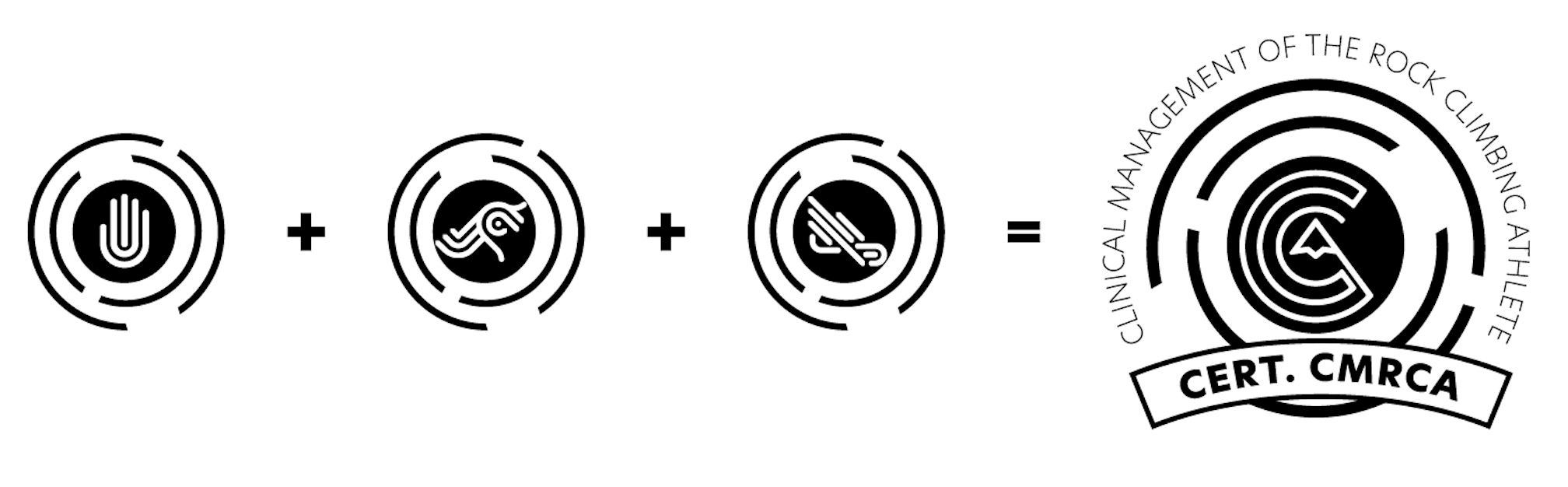
The Clinical Management of the Rock Climbing Athlete Certification (Cert. CMRCA) includes a total of 36 continuing education contact hours (3.6 CEUs) across three comprehensive course modules.
Finger Injury Course
The Finger Injury Course is approved for 12 continuing education contact hours (1.2 CEUs) in California (CPTA #26-210) and in all states that offer reciprocity with California.
Upper Body Injury Course
The Upper Body Injury Course is approved for 12 continuing education contact hours (1.2 CEUs) in California (CPTA #26-223) and in all states that offer reciprocity with California.
Lower Body Injury Course
The Lower Body Injury Course is approved for 12 continuing education contact hours (1.2 CEUs) in California (CPTA #26-224) and in all states that offer reciprocity with California.
States Offering Reciprocity with California
Alabama, Arizona, Colorado, Connecticut, Washington DC, Delaware, Georgia, Hawaii, Idaho, Indiana, Iowa, Kentucky, Maine, Massachusetts, Michigan, Mississippi, Missouri, Montana, Nebraska, New Hampshire, North Carolina, North Dakota, Oregon, Pennsylvania, Rhode Island, South Dakota, Utah, Vermont, Virginia, Washington, and Wyoming.
Total Certification Hours
36 Continuing Education Contact Hours
3.6 CEUs
Self-Guided Online Learning
Certificate of Completion Provided for Each Course
If you have questions regarding your specific state licensing requirements, please contact your state's licensing authority.
We are also happy to provide documentation for registrants seeking individual approval from their licensing board. Requests can be submitted to kevin@theclimbclinic.com.
Please note that continuing education requirements vary by state and profession. Participants are responsible for verifying acceptance of continuing education credits with their respective licensing board. description
-
If you're wondering whether this certification aligns with your professional goals, clinical background, or patient population, we'd be happy to answer your questions.
Reach out anytime:
📧 kevin@theclimbclinic.com
We're committed to helping clinicians develop the confidence and expertise needed to effectively care for climbing athletes.
-
What makes Cert. CMRCA different from other orthopedic continuing education courses?
Cert. CMRCA is specifically focused on the unique injury patterns, movement demands, rehabilitation considerations, and return-to-climbing decisions encountered when working with climbers. Rather than teaching general orthopedic principles, the certification demonstrates how to apply those principles within a climbing-specific framework.
Do I need to be a climber to benefit from Cert. CMRCA?
No. Many clinicians who work with climbers are not climbers themselves. Cert. CMRCA provides the knowledge, terminology, movement analysis, and clinical framework necessary to confidently evaluate and manage climbing athletes regardless of your personal climbing experience.
How long does it typically take to complete Cert. CMRCA?
Cert. CMRCA includes 36 contact hours of self-guided content. Participants can progress through the material at their own pace and revisit modules as needed.
How long will I have access to Cert. CMRCA?
Participants receive 3 years of access to all online course content through the learning platform. This provides ample time to complete the certification and revisit course materials as needed.
In addition, all downloadable course resources, handouts, and materials may be downloaded and retained for lifetime reference.
Participants will also maintain access to any downloaded certificates and course completion documentation earned during their enrollment period.
What types of injuries are covered in Cert. CMRCA?
Cert. CMRCA covers common climbing-related injuries of the fingers, shoulder, elbow, wrist, cervical spine, thoracic spine, lumbar spine, hip, knee, ankle, foot, and toes, along with climbing-specific rehabilitation and return-to-performance considerations.
Can I use the Cert. CMRCA credential after completing the program?
Yes. Participants who successfully complete all course requirements and pass the final examination with a score of 80% or higher may use the designation:
Cert. CMRCA
(Certified in the Clinical Management of the Rock Climbing Athlete)What if I primarily work with general orthopedic patients?
The concepts taught throughout Cert. CMRCA extend beyond climbing and can enhance clinical reasoning, rehabilitation programming, and return-to-sport decision-making across a wide range of orthopedic populations.
How often are the live case study reviews held?
Live case study reviews are scheduled quarterly throughout the year. Dates will be announced in advance, and recordings will be available to all Cert. CMRCA participants.
Will the exercise library continue to grow?
Yes. The Climbing Rehabilitation Exercise Library is intended to be a living resource, with new exercises, progressions, and educational content added over time.
Is Cert. CMRCA appropriate for students and new graduates?
Absolutely. Cert. CMRCA is designed to provide a systematic framework that helps students and early-career clinicians develop confidence in evaluating and managing climbing-related injuries while strengthening clinical reasoning skills.
Do I need to complete the courses in a specific order?
While participants may complete the courses in any order, we recommend progressing through the Finger Injury, Upper Body Injury, and Lower Body Injury courses sequentially to maximize learning and clinical reasoning development.
Can I access the course on mobile devices?
Yes. Cert. CMRCA is hosted on an online learning platform and can be accessed on computers, tablets, and mobile devices with an internet connection.
Who do I contact if I have questions?
For questions regarding Cert. CMRCA, CEUs, enrollment, or technical support, please contact kevin@theclimbclinic.com.